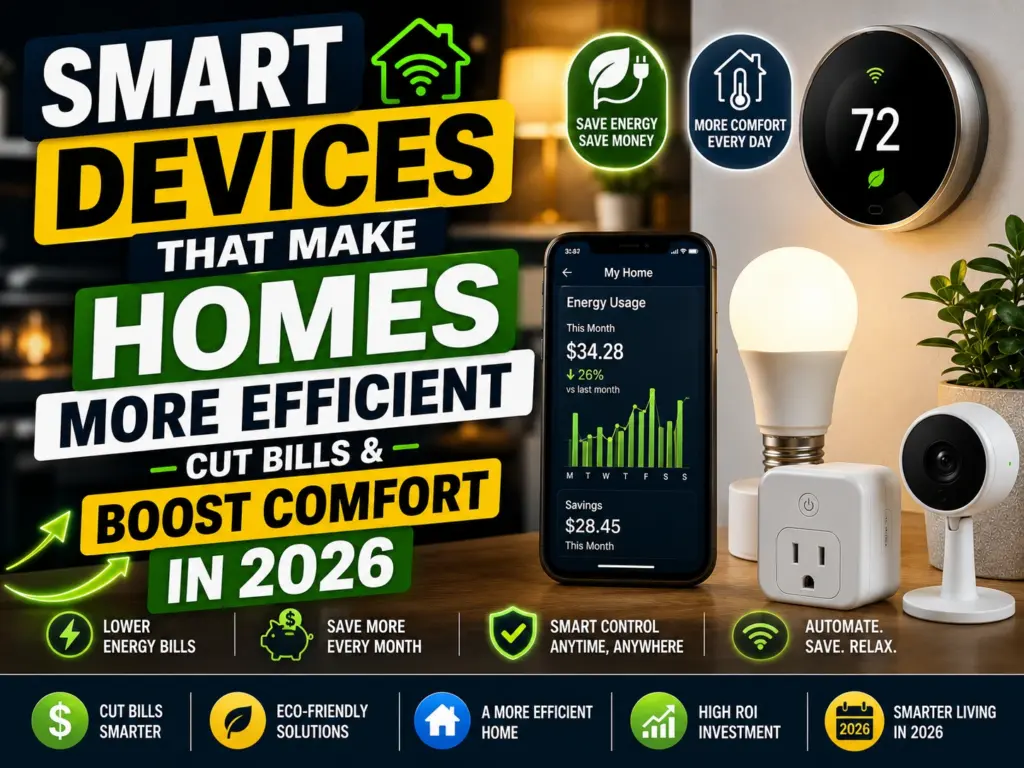
Looking to cut your utility bills without sacrificing comfort? Deploying the right smart devices is the most direct way to make a home more efficient, and 2026 data shows that a well‑planned ecosystem can shrink energy expenses by up to 30 %.
Why Smart Devices Are the Core of an Energy‑Efficient Home
Home automation has moved from novelty to necessity as IoT energy savings become quantifiable. Connected thermostats, adaptive lighting, and real‑time power monitors work together to eliminate waste, respond to occupancy patterns, and fine‑tune consumption based on utility rate structures. The U.S. Department of Energy reports that smart thermostats alone reduced heating and cooling loads by an average of 12 % in 2025, a trend that continued upward into 2026.
Smart Thermostats: The Command Center for Climate Control
Modern thermostats learn your schedule, detect open windows, and integrate with utility demand‑response programs. The Nest Learning Thermostat 2024 edition, for instance, achieved a 13 % reduction in HVAC energy use compared with manual control, according to a field study by the Consumer Technology Association (CTA, 2026). By automatically lowering temperature during unoccupied periods and pre‑heating or pre‑cooling when rates dip, they turn variable electricity pricing into a savings opportunity.
Table of Contents
- Why Smart Devices Are the Core of an Energy‑Efficient Home
- Smart Thermostats: The Command Center for Climate Control
- Smart Lighting: From On/Off to Adaptive Illumination
- Energy‑Monitoring Smart Plugs: Visibility That Drives Action
- Financial Impact: Real‑World Savings in 2026
- Case Study: The Miller Family’s 2026 Smart Home Transformation
- Implementation Guide: Choosing and Installing Smart Devices for Maximum Efficiency
- 1. Conduct a Baseline Energy Audit
- 2. Prioritize High‑ROI Devices
- 3. Ensure Compatibility and Secure Integration
- 4. Leverage Utility Incentives
- Common Pitfalls and How to Avoid Them
- FAQ – Quick Answers to Common Questions
- Do smart devices really pay for themselves?
- Can I integrate devices from different brands?
- Are there any hidden costs?
- Will smart devices affect my home resale value?
- Conclusion: Turning Smart Technology into Real Money Savings
Smart Lighting: From On/Off to Adaptive Illumination
LED bulbs paired with motion sensors or daylight‑responsive controls can cut lighting electricity by 40–60 % in rooms with intermittent use. Philips Hue’s latest ecosystem incorporates a built‑in lux sensor that dims lights to the minimum comfortable level, while the Philips Hue app provides weekly usage reports that help households identify over‑lit zones. The Lighting Research Center (LRC, 2026) estimates that widespread adoption of such adaptive lighting could save U.S. households $1.3 billion annually.
Energy‑Monitoring Smart Plugs: Visibility That Drives Action
Plug‑in devices often account for up to 15 % of a home’s electricity bill, yet they are invisible on traditional utility statements. Smart plugs like the TP‑Link Kasa HS110 give real‑time wattage data and allow users to schedule power‑off periods for standby‑heavy equipment such as gaming consoles or home office routers. A 2025 Nielsen survey showed that households using energy‑monitoring plugs reduced their “phantom load” consumption by an average of 8 %.
Financial Impact: Real‑World Savings in 2026
According to the Energy Information Administration (EIA, 2026), the average U.S. residential electricity bill was $115 per month. When a family integrates a smart thermostat, adaptive lighting, and at least two energy‑monitoring plugs, the combined effect typically trims the bill by $35–$45, translating to an annual saving of $420–$540. These figures align with the analysis in Top Products That Lower Your Energy Bills – Proven Ways to Cut Costs in 2026, which highlights high‑ROI tech as a cornerstone of money‑saving strategies.
Beyond electricity, smart water‑flow sensors such as the Flo Smart Water Monitor detect leaks and reduce water waste, cutting water bills by up to 15 % in regions with high rates. The Environmental Protection Agency (EPA, 2026) estimates that a typical family can save $70–$120 per year on water by adopting such devices.
Case Study: The Miller Family’s 2026 Smart Home Transformation
The Millers, a four‑person household in Austin, Texas, retrofitted their 2,300‑sq‑ft home with a suite of connected devices in March 2026. Their investment included:
- Nest Learning Thermostat (2024 model)
- Philips Hue White & Color Ambiance starter kit
- Three TP‑Link Kasa HS110 smart plugs
- Flo Smart Water Monitor
After six months, the Miller’s utility statements reflected a 28 % reduction in electricity usage and a 12 % dip in water consumption. The total out‑of‑pocket cost for the hardware was $820, while the combined monthly savings averaged $48, delivering a payback period of roughly 17 months. Their experience mirrors findings from the Gadgets That Are Worth Every Dollar: High‑ROI Tech to Slash Your Bills in 2026 article, which emphasizes the importance of prioritizing devices with the fastest return on investment.
Implementation Guide: Choosing and Installing Smart Devices for Maximum Efficiency
1. Conduct a Baseline Energy Audit
Start by reviewing the past year’s utility bills to identify the largest expense categories. Many utilities now provide an online “energy dashboard” that breaks down usage by month and peak demand periods. This baseline helps you target the most wasteful systems first.
2. Prioritize High‑ROI Devices
Based on the audit, focus on the following order:
- Smart thermostat – captures the biggest share of heating and cooling loads.
- Smart lighting – easy to install and yields immediate savings.
- Energy‑monitoring plugs – expose hidden standby consumption.
- Smart water sensors – address leaks and excessive flow.
This hierarchy aligns with the recommendations in Smart Products That Help Reduce Monthly Expenses – Proven Ways to Cut Bills in 2026, which ranks devices by average annual savings per dollar spent.
3. Ensure Compatibility and Secure Integration
Most modern devices communicate via Wi‑Fi, Zigbee, or Thread. Choose a central hub—such as the Amazon Echo Show 10 or Google Nest Hub—that supports multiple protocols to avoid fragmentation. Secure your network by enabling WPA3 encryption and creating a dedicated “IoT” SSID, reducing the risk of cyber intrusion.
4. Leverage Utility Incentives
Many state energy programs offer rebates for installing energy‑efficient smart thermostats and LED lighting. For example, the Texas Energy Conservation Office (TECO) provided a $50 rebate per smart thermostat installed in 2026, cutting the effective cost for the Miller family by 6 %.
Common Pitfalls and How to Avoid Them
Over‑automation. Adding too many devices without a clear integration plan can lead to conflicts and wasted energy. Stick to a phased rollout and test each device’s impact before expanding.
Ignoring Data. Smart devices generate valuable usage insights; however, many users never review the reports. Set monthly reminders to analyze energy dashboards and adjust schedules accordingly.
Neglecting Firmware Updates. Out‑of‑date firmware can degrade performance and expose security vulnerabilities. Enable automatic updates where possible, and review release notes for any changes to energy‑saving algorithms.
FAQ – Quick Answers to Common Questions
Do smart devices really pay for themselves?
Yes, when you prioritize high‑impact devices like thermostats and adaptive lighting, most households achieve a payback within 1.5–2 years, according to the Consumer Technology Association (CTA, 2026).
Can I integrate devices from different brands?
Most ecosystems support cross‑brand integration through standards like Matter, which became widely adopted in 2025. This ensures that a Nest thermostat can work seamlessly with Philips Hue lights and TP‑Link plugs.
Are there any hidden costs?
Potential hidden costs include subscription fees for advanced analytics (e.g., Nest Aware) and the need for a robust home Wi‑Fi network. However, many manufacturers now bundle basic analytics for free, making the overall cost structure transparent.
Will smart devices affect my home resale value?
Homes equipped with energy‑efficient technology tend to command a premium of 3–5 % in the market, as highlighted in the National Association of Realtors 2026 report on smart home features.
Conclusion: Turning Smart Technology into Real Money Savings
In 2026, the convergence of home automation, advanced sensors, and utility‑rate intelligence makes smart devices the most effective tool for reducing household expenses. By starting with a clear energy audit, selecting high‑ROI gadgets, and continuously optimizing usage data, homeowners can achieve substantial savings while enhancing comfort and sustainability. For deeper insights on selecting the best tech, explore 5 Smart Gadgets That Save Money Every Month – Proven Ways to Cut Bills, which breaks down each device’s cost‑benefit profile.