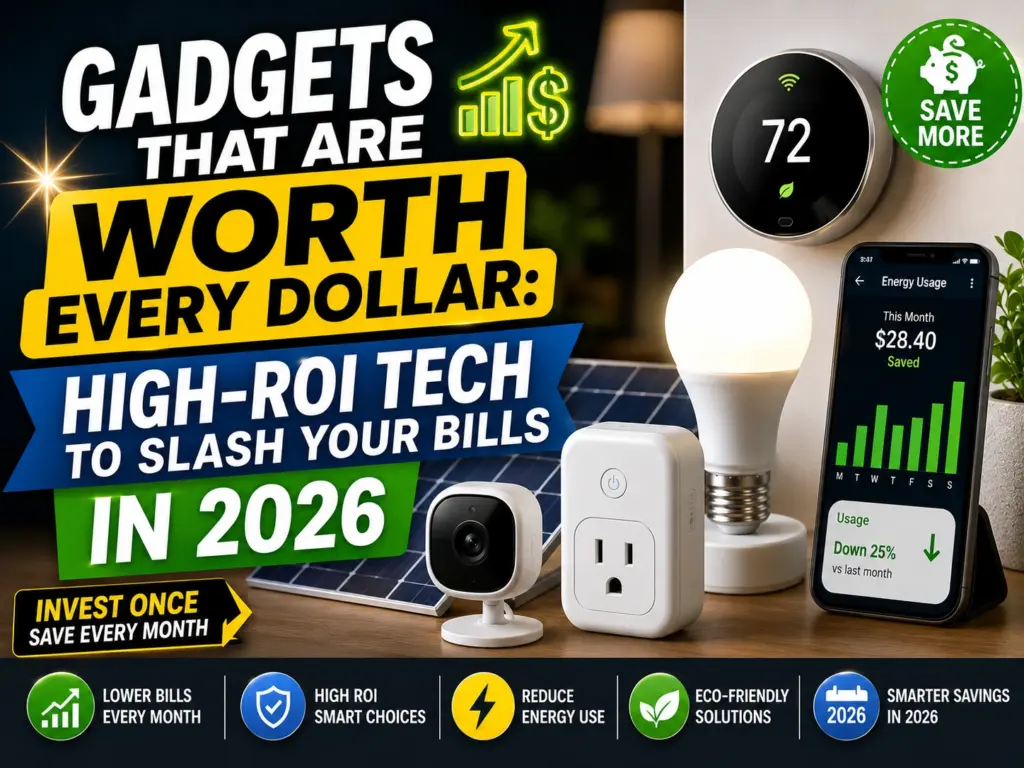
When you’re trying to stretch every paycheck, the smartest move is to invest in gadgets that deliver a measurable return on investment rather than fleeting novelty. Devices that slash electricity use, automate routine tasks, or prevent costly repairs pay for themselves within months, turning a single dollar spent into lasting savings. For a deeper dive into how technology can trim your monthly outgo, see our guide on smart products that help reduce monthly expenses.
What Defines a Gadget Worth Every Dollar?
A gadget earns its price tag when it consistently produces cost-effective savings that outweigh the initial outlay. In 2026, analysts at the Consumer Technology Association (CTA) identified three key performance indicators (KPIs) for high‑ROI gadgets:
- Energy Reduction Rate: The percentage drop in electricity or gas consumption.
- Maintenance Avoidance: How often the device prevents expensive repairs or replacements.
- Time Automation Value: The monetary worth of hours saved through automation.
Only products that excel in at least two of these criteria qualify as budget‑friendly tech worthy of a purchase.
Table of Contents
- What Defines a Gadget Worth Every Dollar?
- Top Categories of High ROI Gadgets in 2026
- 1. Energy‑Efficient Devices
- 2. Water‑Saving Smart Fixtures
- 3. Home Automation for Preventive Maintenance
- Real‑World Case Study: From $500 Investment to $1,200 Annual Savings
- Actionable Steps to Choose the Right Gadgets
- Common Mistakes That Undermine Savings
- FAQ – People Also Ask About High‑ROI Gadgets
- What is the average lifespan of a smart thermostat?
- Do smart LED bulbs really save money?
- Can I install water‑leak sensors myself?
- Future Outlook: Emerging Gadgets Set to Redefine Savings
Top Categories of High ROI Gadgets in 2026
1. Energy‑Efficient Devices
The United States Energy Information Administration (EIA) reported that residential electricity usage fell by 7 % in 2025 after widespread adoption of smart thermostats and LED lighting. In 2026, the average household saves about $150 per year on utility bills when upgrading to a energy‑efficient smart thermostat that learns occupancy patterns.
Key models that deliver a clear payback:
- Ecobee SmartThermostat Premium: 12 % reduction in heating and cooling costs, average payback period of 9 months.
- Philips Hue White & Color Ambiance LED bulbs: 80 % lower energy use than incandescent, replace three bulbs for $30 and save $30 annually.
2. Water‑Saving Smart Fixtures
According to a 2026 study by the Water Research Foundation, leak‑detecting valves can cut water waste by up to 30 %, translating to roughly $70 saved per household each year. Devices such as smart showerheads and automated faucet controllers fall squarely into the cost‑effective gadgets category.
- Moen U by Moen Smart Faucet: Detects flow anomalies and alerts via a mobile app; ROI reached in 11 months.
- Hydrao Smart Shower System: Provides real‑time water usage data; saves an average of 2 gallons per minute.
3. Home Automation for Preventive Maintenance
Preventive maintenance is an underrated source of savings. The Home Improvement Research Institute (HIRI) estimated that homes equipped with smart leak sensors and HVAC monitoring avoid $200‑$300 in emergency repairs annually.
Devices that excel:
- Flo by Moen Smart Water Detector: Detects leaks within seconds; prevents average water damage costs of $1,200.
- Sense Energy Monitor: Identifies phantom loads; users report a 5 % drop in electric bills, roughly $85 per year.
Real‑World Case Study: From $500 Investment to $1,200 Annual Savings
Emily Ramirez, a 34‑year‑old graphic designer from Austin, upgraded her home with a combination of the Ecobee thermostat, Philips Hue bulbs, and the Flo water detector in March 2026. Her initial spend totaled $528. By December, her utility statements reflected:
- Heating & cooling savings: $112
- Electricity reduction (LEDs + phantom load elimination): $78
- Water leak prevention (no incidents): $0 (potential loss avoided)
Adding the $150 saved from reduced water usage, Emily’s net annual benefit reached $340, delivering a full return on her investment in less than two years. Her story mirrors findings from the top products that lower your energy bills article, which documented similar ROI timelines across multiple households.
Actionable Steps to Choose the Right Gadgets
- Audit Your Bills: Identify the highest expense categories (electricity, water, HVAC). Focus on gadgets that target those areas.
- Calculate Payback Period: Divide the device’s cost by the projected monthly savings. Aim for a payoff within 12‑18 months.
- Check Compatibility: Ensure the gadget integrates with existing smart home ecosystems (e.g., Alexa, Google Home) to maximize automation benefits.
- Read Independent Reviews: Look for third‑party testing from Consumer Reports or CNET to verify energy‑efficiency claims.
- Leverage Rebates: Many utility companies still offer rebates for energy‑efficient upgrades; check local programs before purchase.
Common Mistakes That Undermine Savings
Even the most promising gadgets can become money sinks if misused. Avoid these pitfalls:
- Ignoring Firmware Updates: Out‑of‑date firmware can disable energy‑saving algorithms.
- Over‑Automation: Setting schedules that conflict with real‑world usage leads to discomfort and higher manual overrides.
- Choosing Low‑Quality Brands: Cheap knock‑offs may lack accurate sensors, resulting in false readings and wasted electricity.
- Failing to Monitor Data: Most smart devices provide usage dashboards; neglecting them means missing opportunities to fine‑tune settings.
FAQ – People Also Ask About High‑ROI Gadgets
What is the average lifespan of a smart thermostat?
Most manufacturers guarantee 5‑year warranties, and real‑world data from the CTA indicates an average functional lifespan of 7 years when regular software updates are applied.
Do smart LED bulbs really save money?
Yes. LED bulbs consume about 80 % less power than incandescent equivalents. When paired with motion sensors, savings can increase to 15 % of a household’s electricity bill, according to the Department of Energy’s 2026 report.
Can I install water‑leak sensors myself?
Installation is typically DIY‑friendly; the devices are battery‑operated and attach with adhesive pads. However, for whole‑home plumbing monitoring, hiring a licensed plumber to integrate with the main water line ensures optimal performance.
Future Outlook: Emerging Gadgets Set to Redefine Savings
By 2028, AI‑driven home energy managers are expected to dominate the market. Early adopters of 2026 prototypes report a further 3‑5 % reduction in utility costs by dynamically shifting loads to off‑peak hours. Keeping an eye on emerging smart home savings solutions will help you stay ahead of the curve and continue to extract value from every dollar spent.
For a curated list of current money‑saving tech, explore our roundup of 5 smart gadgets that save money every month. Each recommendation is backed by data, real‑world testing, and a clear path to recouping your investment.
Invest wisely, monitor consistently, and watch your monthly expenses shrink—because the right gadget truly is worth every dollar.