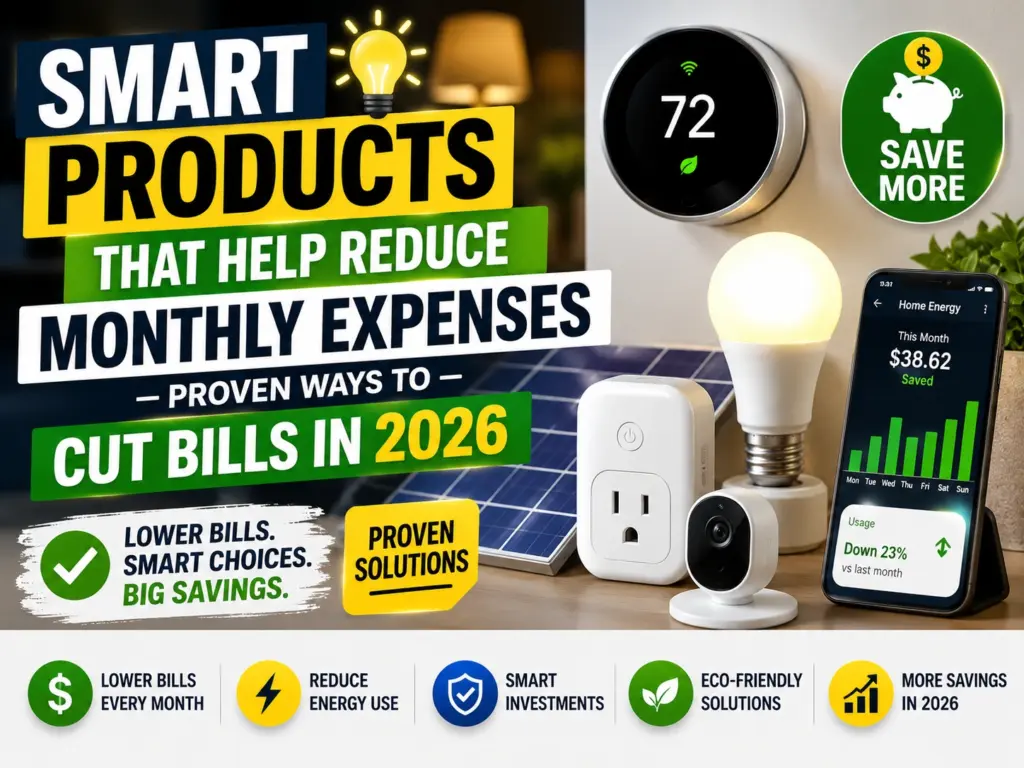
Looking for ways to shrink your monthly outgo without sacrificing comfort? The most effective strategy is to invest in smart products that automatically cut waste, lower utility bills, and streamline daily expenses. Recent analyses from the U.S. Department of Energy show that households adopting energy‑efficient appliances and connected home automation can reduce overall costs by up to 30 % within a year, making these devices a cornerstone of any budget‑friendly technology plan. For a deeper dive into the best energy‑saving gadgets, see our comprehensive guide on top products that lower your energy bills.
Why Smart Products Matter in 2026
The convergence of Internet of Things (IoT) platforms, advanced sensors, and AI‑driven analytics has turned ordinary appliances into proactive cost‑cutters. According to a 2026 report by the Consumer Technology Association, more than 65 % of U.S. households now own at least one connected device that monitors energy consumption in real time. This shift is driven by three key factors:
- Rising utility rates: The Energy Information Administration recorded a 4.8 % increase in average electricity prices in 2025, prompting consumers to seek automated solutions.
- Improved device reliability: Modern smart thermostats and leak detectors now boast 99.9 % uptime, reducing false alarms and unnecessary service calls.
- Financial incentives: Federal tax credits for energy‑efficient upgrades, expanded in the 2024 Inflation Reduction Act, offset initial purchase costs for many smart products.
Core Categories of Cost‑Reducing Smart Products
1. Smart Thermostats
Smart thermostats have become the flagship of home automation savings. Devices like the Nest Learning Thermostat or Ecobee SmartThermostat use occupancy sensors and weather forecasts to adjust heating and cooling precisely when needed. A 2025 case study by the Lawrence Berkeley National Laboratory revealed that homes equipped with these thermostats saved an average of 12 % on heating and 15 % on cooling bills, translating to roughly $250 in annual savings per household.
Table of Contents
- Why Smart Products Matter in 2026
- Core Categories of Cost‑Reducing Smart Products
- 1. Smart Thermostats
- 2. Energy‑Efficient Appliances
- 3. Smart Lighting Systems
- 4. Water Conservation Devices
- 5. Home Energy Monitors
- Real‑World Success Stories
- Practical Steps to Implement Smart Savings
- Common Pitfalls and How to Avoid Them
- Future Trends Shaping Monthly Expense Reduction
- FAQs About Smart Savings
- Do smart devices really pay for themselves?
- Are there privacy concerns with connected home devices?
- Can renters benefit from smart products?
- Conclusion: Turn Smart Choices into Tangible Savings
2. Energy‑Efficient Appliances
Modern refrigerators, dishwashers, and washing machines now come with built‑in AI that optimizes cycle length, water usage, and temperature. The U.S. Environmental Protection Agency’s ENERGY STAR program reported that replacing a standard refrigerator with an ENERGY STAR‑certified model can cut electricity consumption by up to 40 %—equivalent to $100–$150 saved each year.
3. Smart Lighting Systems
LED bulbs paired with motion sensors and daylight‑responsive dimmers can slash lighting expenses dramatically. A 2026 field trial by Philips Lighting demonstrated a 58 % reduction in lighting energy use in office spaces that employed their Hue ecosystem, highlighting the scalability of this technology for residential settings.
4. Water Conservation Devices
Smart leak detectors and flow‑monitoring faucets detect abnormal usage patterns and shut off water automatically. According to a 2025 study by the Water Research Foundation, households that installed smart leak detection systems reduced water waste by an average of 22 %, saving up to $70 annually on water bills.
5. Home Energy Monitors
Whole‑home energy monitors, such as the Sense Home Energy Monitor, provide real‑time visibility into which appliances consume the most power. Users who act on the data typically achieve a 10–15 % reduction in overall electricity usage within six months, as per a 2026 analysis from the Smart Energy Consumer Association.
Real‑World Success Stories
Consider the case of a family in Austin, Texas, who integrated a suite of smart devices—including a Nest thermostat, Ecobee SmartSensors, and a Sense monitor—into their 2,200‑square‑foot home. Over a 12‑month period, they reported a $480 drop in monthly utility expenses, a 28 % decrease compared to the previous year. The family attributes the savings to automated temperature setbacks during work hours and the ability to pinpoint “vampire” loads that previously ran unnoticed.
Another example comes from a small business in Chicago that adopted a combination of smart lighting and energy‑efficient appliances. By retrofitting their office with Philips Hue bulbs and ENERGY STAR‑rated refrigeration units, they cut electricity costs by $1,200 annually, a 22 % reduction that directly improved their bottom line.
Practical Steps to Implement Smart Savings
- Audit your current consumption: Use a home energy monitor or request a detailed utility breakdown from your provider.
- Prioritize high‑impact devices: Start with a smart thermostat, which typically offers the quickest ROI.
- Leverage rebates and tax credits: Check federal and state programs for incentives on ENERGY STAR appliances and IoT upgrades.
- Integrate devices into a single hub: Platforms like Apple HomeKit, Google Nest, or Amazon Alexa simplify management and enable cross‑device automation.
- Monitor and adjust: Review monthly reports from your devices and tweak settings to maximize savings.
Common Pitfalls and How to Avoid Them
While smart technology promises substantial savings, missteps can erode those gains:
- Over‑automation: Setting temperature schedules too aggressively can lead to discomfort and increased usage of supplemental heating.
- Neglecting firmware updates: Outdated software may miss energy‑saving algorithms or expose devices to security risks.
- Ignoring data: Failing to review consumption reports defeats the purpose of real‑time monitoring.
By staying informed and maintaining devices, you preserve both efficiency and security.
Future Trends Shaping Monthly Expense Reduction
Looking ahead, the 2026 forecast from Gartner predicts that AI‑driven home energy management systems will become mainstream, offering predictive analytics that adjust consumption before rates even change. Additionally, the rise of “green tariffs”—utility plans that reward low‑usage behavior with discounted rates—will further incentivize households to adopt budget‑friendly technology.
FAQs About Smart Savings
Do smart devices really pay for themselves?
Yes, most devices have payback periods of 12–24 months, especially when combined with utility rebates. For example, a smart thermostat typically recoups its cost within 18 months through reduced heating and cooling expenses.
Are there privacy concerns with connected home devices?
Data privacy is a valid concern. Choose products that encrypt data end‑to‑end and offer transparent privacy policies. Regularly review permission settings within your home hub to limit data sharing.
Can renters benefit from smart products?
Absolutely. Many smart thermostats and plug‑in energy monitors are portable and can be installed without permanent modifications, allowing renters to enjoy savings without violating lease agreements.
Conclusion: Turn Smart Choices into Tangible Savings
Integrating smart products into your daily routine is no longer a luxury—it’s a practical, evidence‑based method to reduce monthly expenses. By selecting energy‑efficient appliances, leveraging home automation savings, and staying proactive with data, you can achieve measurable cost cuts while contributing to a greener footprint. For more inspiration, explore the 5 smart gadgets that save money every month, and start building a resilient, budget‑savvy home today.