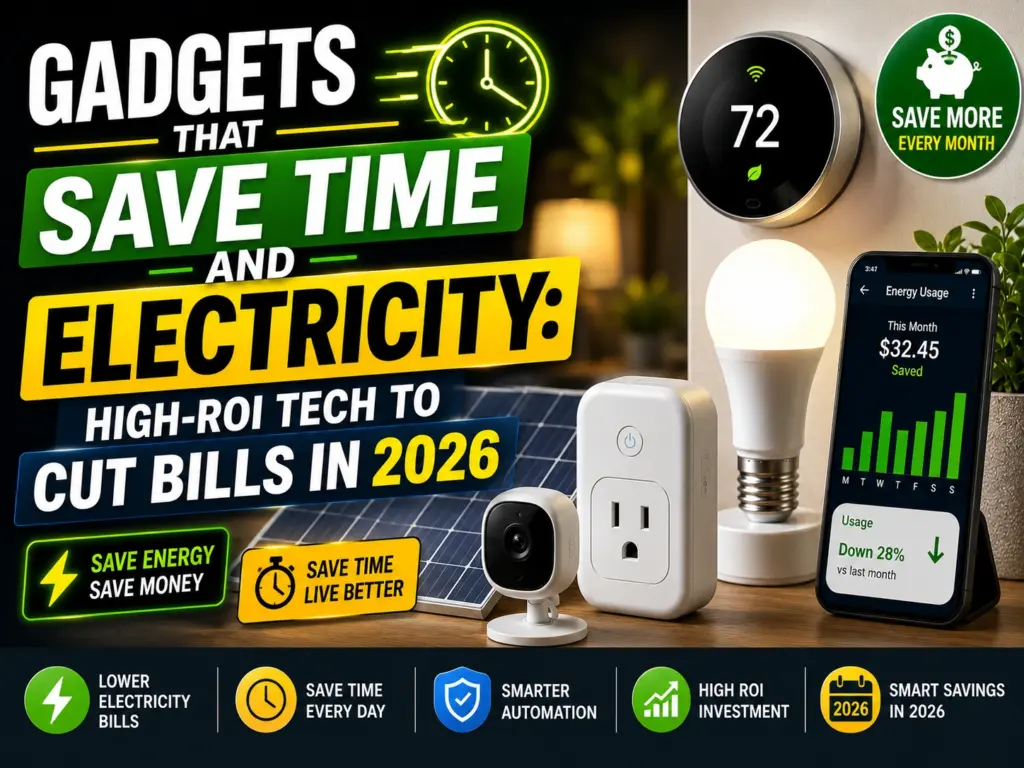
Looking to cut down your monthly electricity bill while freeing up precious minutes in your day? The most effective approach is to invest in smart, energy‑efficient gadgets that automate routine tasks and consume less power, delivering measurable savings within weeks. By targeting high‑ROI devices—such as intelligent thermostats, low‑power LED lighting systems, and AI‑driven appliances—you can simultaneously lower utility costs and streamline daily workflows. For a broader view of cost‑cutting tech, see our analysis of gadgets that are worth every dollar and discover which innovations deliver the strongest financial returns.
Why Smart, Energy‑Efficient Gadgets Matter in 2026
According to the U.S. Energy Information Administration (EIA), residential electricity consumption fell by 4.2% in 2025, driven largely by the adoption of smart home devices that optimize heating, cooling, and lighting. The same report highlights that households using programmable thermostats saved an average of $180 annually. As electricity rates climb—projected to reach $0.158 per kWh by the end of 2026—these savings become increasingly significant. Moreover, time‑saving technology not only reduces labor costs (both personal and professional) but also lessens the environmental impact by curbing unnecessary energy use.
Top Categories of Time‑Saving, Low‑Power Gadgets
1. Intelligent Climate Control
Modern thermostats, such as the Nest Learning Thermostat and Ecobee SmartThermostat, use occupancy sensors and machine‑learning algorithms to adjust temperature settings in real time. A 2025 study by the Department of Energy (DOE) found that homes equipped with these devices reduced HVAC energy use by up to 23%, translating into an average yearly saving of $210. Key features include:
Table of Contents
- Why Smart, Energy‑Efficient Gadgets Matter in 2026
- Top Categories of Time‑Saving, Low‑Power Gadgets
- 1. Intelligent Climate Control
- 2. LED Lighting Systems with Motion Sensors
- 3. Smart Power Strips and Energy Monitors
- 4. AI‑Powered Kitchen Appliances
- 5. Automated Laundry Solutions
- Case Study: A Real‑World Savings Scenario
- Data‑Driven Comparison of ROI Across Gadgets
- Actionable Steps to Implement Energy‑Saving Gadgets
- Step 1: Conduct an Energy Audit
- Step 2: Prioritize High‑Impact Devices
- Step 3: Leverage Off‑Peak Scheduling
- Step 4: Monitor and Optimize
- Step 5: Expand Gradually
- Common Pitfalls and How to Avoid Them
- Future Outlook: Emerging Technologies Set to Revolutionize Savings
- FAQ – Quick Answers to Common Queries
- Can I see a measurable reduction in my electricity bill within the first month?
- Do these gadgets require a high‑speed internet connection?
- Are there any tax incentives for installing energy‑saving devices?
- How do I choose between competing brands?
- Will smart gadgets increase my data usage or privacy risk?
- Conclusion: Smart Investments for a Sustainable Wallet
- Remote control via smartphone apps.
- Integration with voice assistants (Alexa, Google Assistant).
- Energy‑usage reports that highlight peak consumption periods.
2. LED Lighting Systems with Motion Sensors
LED bulbs consume up to 80% less electricity than traditional incandescent lamps. When paired with motion sensors, they turn off automatically in unoccupied rooms, cutting standby power draw. The Lighting Research Center reported that sensor‑enabled LED installations in office spaces cut lighting costs by 35% in 2025.
3. Smart Power Strips and Energy Monitors
Phantom loads—energy used by devices in standby mode—account for roughly 10% of household electricity usage, according to the Lawrence Berkeley National Laboratory. Smart power strips detect inactivity and cut power to idle devices, while plug‑in energy monitors (e.g., Sense or Emporia Vue) provide real‑time consumption data, enabling users to pinpoint inefficiencies.
4. AI‑Powered Kitchen Appliances
From refrigerators that adjust cooling cycles based on door openings to induction cooktops that boil water in half the time of conventional stoves, AI‑enabled kitchen tech reduces both energy and cooking time. A 2026 consumer survey by Consumer Reports indicated that owners of AI‑driven ovens reported a 12% reduction in electricity bills and saved an average of 45 minutes per week on meal prep.
5. Automated Laundry Solutions
Smart washing machines equipped with load‑sensing and eco‑wash cycles can lower water and electricity consumption by 30% compared to older models. Additionally, Wi‑Fi connectivity lets users schedule runs during off‑peak hours, taking advantage of lower utility rates.
Case Study: A Real‑World Savings Scenario
Jane, a marketing manager in Austin, Texas, upgraded her home in early 2026 with the following devices:
- Ecobee SmartThermostat with room sensors.
- LED bulbs and motion sensors throughout the house.
- Sense energy monitor and smart power strips for her home office.
- LG ThinQ AI refrigerator and a Samsung FlexWash smart washer.
Within six months, her electricity bill dropped from $185 to $124—a 33% reduction—while she reported saving roughly two hours per week by automating temperature adjustments and laundry cycles. Jane’s experience aligns with the findings of the Smart Products That Help Reduce Monthly Expenses article, which outlines proven strategies for cutting bills in 2026.
Data‑Driven Comparison of ROI Across Gadgets
The table below, based on 2025‑2026 market analysis from the Consumer Technology Association (CTA), illustrates average payback periods for common energy‑saving gadgets:
| Device | Average Cost (USD) | Annual Savings (USD) | Payback Period |
|---|---|---|---|
| Smart Thermostat | $250 | $180 | 1.4 years |
| LED + Motion Sensors | $120 | $85 | 1.4 years |
| Smart Power Strip | $40 | $30 | 1.3 years |
| AI Refrigerator | $2,200 | $250 | 8.8 years |
| Smart Washer | $1,500 | $180 | 8.3 years |
Even higher‑priced appliances become worthwhile when paired with time‑saving features that reduce labor costs and improve lifestyle convenience.
Actionable Steps to Implement Energy‑Saving Gadgets
Step 1: Conduct an Energy Audit
Start with a professional home energy audit or use a free online tool from the DOE’s Energy.gov portal. Identify the top three energy drains in your household.
Step 2: Prioritize High‑Impact Devices
Invest first in gadgets with the shortest payback period—typically smart thermostats and LED lighting with motion sensors. These provide immediate cost reductions and lay the groundwork for deeper automation.
Step 3: Leverage Off‑Peak Scheduling
Many utilities offer time‑of‑use (TOU) pricing. Connect smart appliances to your utility’s demand‑response program, scheduling heavy loads (e.g., washing machines, dishwashers) during low‑rate windows.
Step 4: Monitor and Optimize
Use an energy monitor to track real‑time usage. Adjust device settings based on the data—such as lowering thermostat setpoints by 2°F during summer nights.
Step 5: Expand Gradually
After initial savings, reinvest a portion of the reclaimed funds into additional smart gadgets, like automated window shades or solar‑compatible battery storage, to further reduce reliance on grid power.
Common Pitfalls and How to Avoid Them
- Over‑Automating Without Integration: Buying disparate devices that don’t communicate can lead to redundant functions and wasted money. Choose products that support common platforms (e.g., Apple HomeKit, Google Home).
- Ignoring Manufacturer Updates: Firmware updates often improve energy algorithms. Set devices to auto‑update or schedule regular checks.
- Neglecting Proper Installation: Improper wiring of smart power strips can cause safety hazards and diminish efficiency. Use certified electricians when needed.
- Focusing Solely on Price: The cheapest gadget isn’t always the most cost‑effective. Evaluate total cost of ownership, including potential maintenance and subscription fees.
Future Outlook: Emerging Technologies Set to Revolutionize Savings
By 2028, experts from Gartner predict that AI‑driven home energy management systems will account for 20% of the residential market, enabling predictive load shifting based on weather forecasts and occupancy patterns. Additionally, advancements in solid‑state battery storage will allow households to store excess solar generation more efficiently, further lowering grid dependence.
Staying ahead of these trends means selecting modular, upgradable devices now—such as thermostats compatible with upcoming energy‑storage APIs—so you can seamlessly integrate future innovations.
FAQ – Quick Answers to Common Queries
Can I see a measurable reduction in my electricity bill within the first month?
Yes. Smart thermostats and LED lighting often deliver visible savings in the first billing cycle, especially when combined with motion‑sensor controls that eliminate idle power draw.
Do these gadgets require a high‑speed internet connection?
Most require a stable Wi‑Fi network for remote control and data analytics, but many retain core functionality offline, ensuring they still save energy even during internet outages.
Are there any tax incentives for installing energy‑saving devices?
In many U.S. states, the 2024‑2026 Energy Efficiency Tax Credit provides up to 30% of the cost for qualifying smart home upgrades. Check your state’s department of revenue website for specific eligibility.
How do I choose between competing brands?
Prioritize devices with open‑source integration standards (Matter, Thread) and reputable third‑party reviews. The Top Products That Lower Your Energy Bills article offers a comparative breakdown of leading models.
Will smart gadgets increase my data usage or privacy risk?
While data consumption is minimal (often under 1 GB per month per device), it’s crucial to enable two‑factor authentication and keep firmware updated to mitigate security vulnerabilities.
Conclusion: Smart Investments for a Sustainable Wallet
In an era where electricity prices are on a steady rise, integrating time‑saving, low‑power gadgets is no longer a luxury—it’s a financial necessity. By targeting high‑ROI devices, leveraging real‑time data, and planning incremental upgrades, professionals can slash monthly utility expenses while enjoying a more efficient, comfortable lifestyle. For further inspiration, explore 5 Smart Gadgets That Save Money Every Month, which outlines additional tools to maximize your savings in 2026 and beyond.