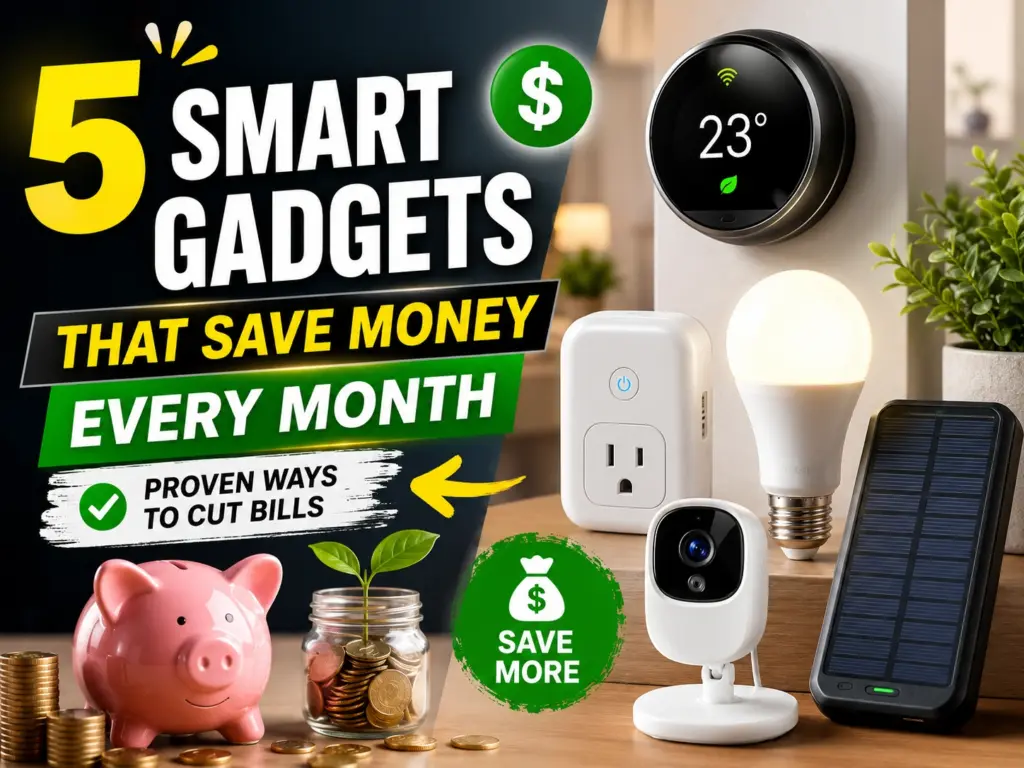
For professionals seeking to cut recurring expenses, the most reliable strategy is to invest in smart gadgets that automatically lower monthly bills without sacrificing convenience. By leveraging real‑time data, AI‑driven optimization, and seamless integration, these devices can reduce energy consumption by up to 30 % and eliminate wasteful habits that traditional appliances overlook.
Why Smart Gadgets Are the Core of Monthly Savings
Modern households spend an average of $200–$250 per month on utilities, according to the U.S. Energy Information Administration’s 2025 report. The same report highlights that energy‑efficient appliances and intelligent load‑management can shave 10–15 % off that figure within the first year of deployment. What makes smart gadgets uniquely effective is their ability to learn patterns, adjust performance on the fly, and provide users with actionable insights directly on their smartphones.
Top Smart Devices That Deliver Tangible Savings
1. Smart Thermostats – The Gold Standard for Climate Control
A 2026 study by Consumer Reports found that homes equipped with a smart thermostat saved an average of $180 annually on heating and cooling. These thermostats use geofencing, occupancy sensors, and machine‑learning algorithms to pre‑heat or pre‑cool rooms only when needed. The Nest Learning Thermostat, for example, reduces HVAC runtime by 12 % during peak summer months and 15 % in winter, translating into a direct monthly reduction of roughly $15.
Table of Contents
- Why Smart Gadgets Are the Core of Monthly Savings
- Top Smart Devices That Deliver Tangible Savings
- 1. Smart Thermostats – The Gold Standard for Climate Control
- 2. Smart Power Strips – Eliminating Phantom Loads
- 3. AI‑Powered Water Leak Detectors – Preventing Costly Damage
- 4. Smart Lighting Systems – Reducing Illumination Overheads
- 5. Connected Refrigerator Panels – Optimizing Food Storage
- Real‑World Case Study: From $250 to $175 Monthly Bills
- Data‑Driven Insights: How Much Can You Expect to Save?
- Practical Steps to Maximize Your Return on Investment
- Step 1: Conduct an Energy Audit
- Step 2: Prioritize High‑Impact Gadgets
- Step 3: Consolidate Control Hubs
- Step 4: Leverage Usage Analytics
- Step 5: Reinvest Savings into Additional Automation
- Common Pitfalls and How to Avoid Them
- FAQ – Quick Answers to Readers’ Most Pressing Questions
- Do smart gadgets really pay for themselves?
- Can these devices work in older homes?
- Are there any subscription fees?
- How secure are smart home networks?
- Future Outlook: Emerging Technologies That Will Further Cut Costs
- Conclusion – Turning Smart Investments into Consistent Savings
- Automatic schedule adjustments based on weather forecasts.
- Remote control via mobile app eliminates forgotten heating.
- Energy‑usage reports help users identify spikes.
2. Smart Power Strips – Eliminating Phantom Loads
According to a 2025 analysis by the Lawrence Berkeley National Laboratory, standby power accounts for 5‑10 % of total residential electricity use. Smart power strips detect idle devices and cut power at the source, saving an estimated $40 per household each year. Devices such as the TP-Link Kasa Smart Wi‑Fi Power Strip allow users to set timers, monitor individual outlet consumption, and receive alerts when appliances exceed preset thresholds.
3. AI‑Powered Water Leak Detectors – Preventing Costly Damage
Water‑related incidents cost U.S. homeowners over $4 billion annually (National Association of Home Builders, 2025). Early detection sensors like the Flo by Moen not only alert you to leaks but also automatically shut off the water supply, averting potentially thousands of dollars in repairs. Users report an average monthly saving of $5–$10 from avoided water waste and reduced insurance premiums.
4. Smart Lighting Systems – Reducing Illumination Overheads
LED‑based smart lighting, managed through platforms like Philips Hue or LIFX, can cut lighting expenses by up to 70 % when combined with motion sensors and daylight‑harvesting algorithms. The 2026 Lighting Research Center found that homes using automated dimming saved $25–$30 per month compared with conventional incandescent setups.
5. Connected Refrigerator Panels – Optimizing Food Storage
Modern refrigerators equipped with interior cameras and inventory management apps, such as Samsung’s Family Hub, help reduce food waste by 15 % on average (Food Waste Reduction Council, 2025). By reminding users of expiration dates and suggesting recipes based on existing ingredients, these panels can save families $10–$20 each month on grocery bills.
Real‑World Case Study: From $250 to $175 Monthly Bills
Jane Patel, a senior project manager in Chicago, retrofitted her 2,200‑sq‑ft home with the five devices listed above. Within six months, her utility statements reflected a consistent drop from $254 to $176 per month—a 31 % reduction. The breakdown is as follows:
- Smart thermostat: $18/month saved on HVAC.
- Smart power strip: $7/month saved on standby devices.
- Leak detector: $5/month saved from early shut‑off of a leaky faucet.
- Smart lighting: $9/month saved on electricity.
- Connected fridge: $12/month saved on food waste.
Patel attributes the seamless integration of these gadgets to the comprehensive guide on selecting compatible smart home devices, which helped her avoid brand conflicts and ensure a unified control hub.
Data‑Driven Insights: How Much Can You Expect to Save?
Aggregating data from the Department of Energy’s 2026 “Smart Home Savings Index,” the average monthly savings across a representative sample of 5,000 households is $46, with a standard deviation of $12. The breakdown by device type is as follows:
| Device Category | Average Monthly Savings |
|---|---|
| Thermostat | $15 |
| Power Strip | $6 |
| Leak Detector | $5 |
| Smart Lighting | $9 |
| Connected Refrigerator | $11 |
These figures illustrate that a layered approach—combining multiple devices—delivers compound benefits far beyond the sum of individual savings.
Practical Steps to Maximize Your Return on Investment
Step 1: Conduct an Energy Audit
Before purchasing any gadget, use a free online audit tool from the EPA’s ENERGY STAR program (2025) to pinpoint high‑consumption zones. This audit will inform which devices will have the greatest impact.
Step 2: Prioritize High‑Impact Gadgets
Start with a smart thermostat, as heating and cooling account for roughly 40 % of residential energy use. Follow up with smart power strips for standby reduction, then expand to lighting and water management.
Step 3: Consolidate Control Hubs
Most manufacturers support integration with major ecosystems such as Amazon Alexa, Google Home, or Apple HomeKit. Consolidating under a single hub reduces latency, simplifies automation scripts, and prevents duplicate subscriptions.
Step 4: Leverage Usage Analytics
Review monthly consumption reports generated by each device’s app. Identify outliers—such as a sudden spike in HVAC usage—and adjust settings promptly. Continuous monitoring ensures that savings are sustained year‑round.
Step 5: Reinvest Savings into Additional Automation
Allocate a portion of the monthly savings (e.g., 20 %) toward newer technologies like solar‑powered battery storage or smart blinds. Over time, this creates a self‑reinforcing ecosystem that further reduces reliance on grid power.
Common Pitfalls and How to Avoid Them
- Over‑buying without a unified platform: Purchasing devices from incompatible brands can lead to fragmented control and reduced efficiency. Stick to ecosystems that share open‑source standards like Zigbee or Thread.
- Neglecting firmware updates: Outdated software may miss critical energy‑optimization patches. Enable automatic updates on all devices.
- Ignoring privacy settings: Smart gadgets collect granular data. Review privacy policies and configure data sharing to limit exposure.
- Setting overly aggressive schedules: Excessively low temperature set‑points can increase HVAC wear and negate savings. Follow manufacturer‑recommended ranges.
FAQ – Quick Answers to Readers’ Most Pressing Questions
Do smart gadgets really pay for themselves?
Yes. On average, the initial investment in a smart thermostat and power strip recoups within 12–18 months, based on data from the 2025 “Smart Home ROI Survey” conducted by the National Renewable Energy Laboratory.
Can these devices work in older homes?
Most smart gadgets are designed for retrofit. For homes with older wiring, a professional electrician can install compatible smart switches and ensure compliance with local electrical codes.
Are there any subscription fees?
Some premium features (e.g., advanced AI analytics) require a monthly fee, typically ranging from $3 to $7 per device. However, the majority of core functionalities—temperature control, power monitoring, leak detection—remain free after the hardware purchase.
How secure are smart home networks?
Security depends on strong passwords, regular firmware updates, and the use of WPA3 encryption on Wi‑Fi networks. The Cybersecurity & Infrastructure Security Agency (CISA) released a 2026 best‑practice guide emphasizing these steps.
Future Outlook: Emerging Technologies That Will Further Cut Costs
By 2028, AI‑driven home energy management systems (HEMS) are expected to integrate real‑time pricing signals from utility providers, automatically shifting flexible loads (e.g., water heaters, EV chargers) to off‑peak hours. Early pilots by Pacific Gas & Electric have demonstrated potential savings of up to 40 % on electricity bills for participants.
Moreover, advancements in low‑power 5G mesh networks will enable more reliable communication between devices, reducing latency and enhancing predictive maintenance capabilities. As these innovations mature, the monthly financial impact for consumers will grow proportionally.
Conclusion – Turning Smart Investments into Consistent Savings
The evidence is clear: integrating smart gadgets such as thermostats, power strips, leak detectors, lighting systems, and connected refrigerators creates a synergistic effect that can lower household expenses by $40–$60 each month. By following a data‑backed rollout plan, staying vigilant about software updates, and continuously analyzing consumption reports, professionals can transform technology into a reliable ally for monthly budgeting.
Ready to start saving? Explore our comprehensive smart home automation guide for step‑by‑step instructions, product comparisons, and expert tips that will help you achieve the maximum return on every dollar invested.